
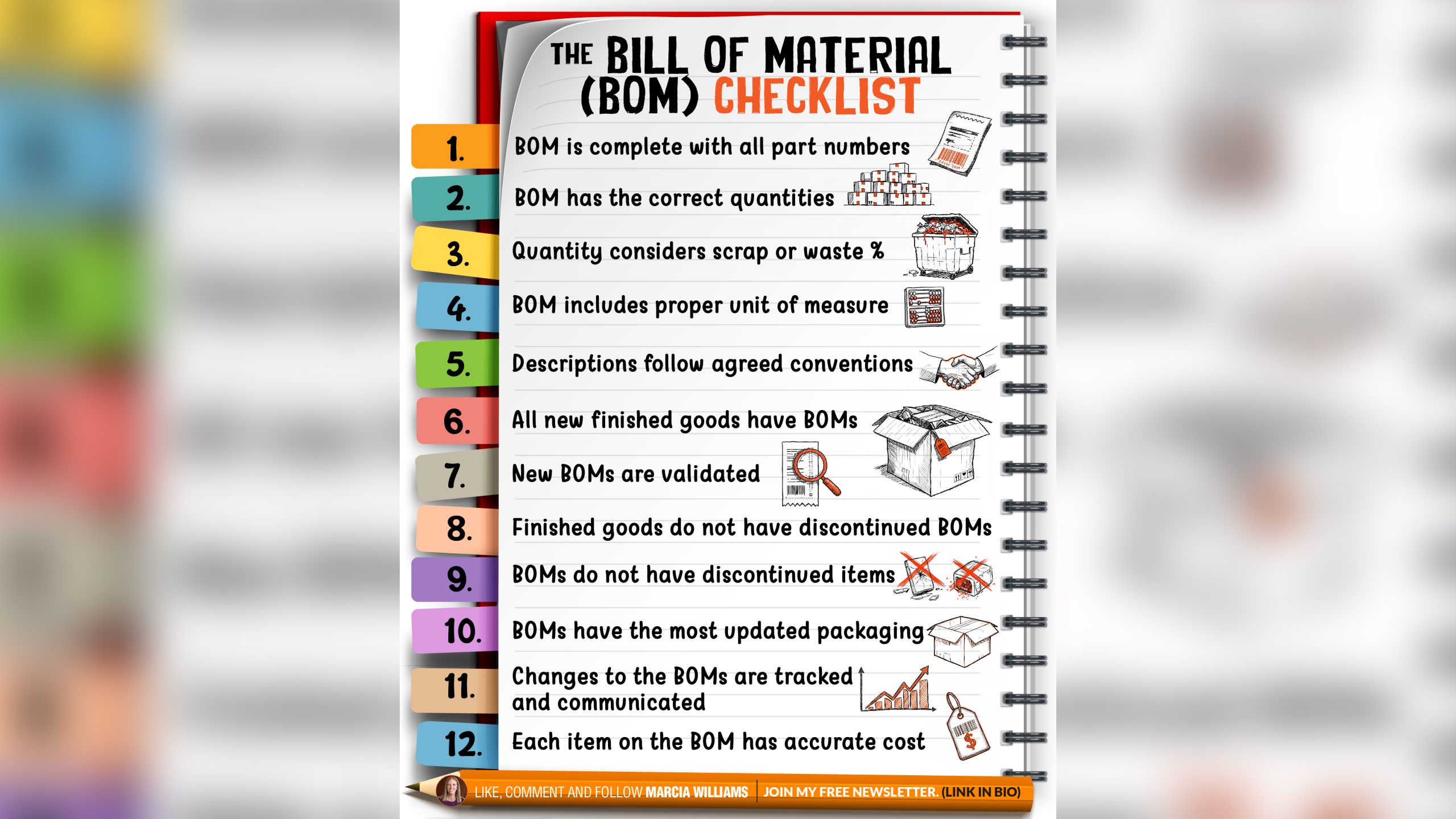
“We have so many issues with the BOMs.”
I hear this all the time, and honestly, I’m not surprised.
Bill of Materials (BOM) is one of the most critical and error-prone areas in manufacturing. When it’s wrong, everything else goes wrong:
- Bad product
- Materials waste
- Missed shipments
- Allergen mislabeling
- Even recalls
It’s a snowball effect and it all starts with the BOM.
But here’s the good news: Every BOM problem is also an opportunity for you to fix, streamline, and improve operations.
First things first. What is a Production BOM?
A Production BOM is a manufacturing-specific document that lists the exact ingredients, packaging, and quantities required to produce one unit of a finished good.
It’s used daily by:
- Operations to make the product
- Planning to schedule materials and capacity
- Quality to verify compliance and labeling
- Materials/ Procurement to buy the right components
And it’s not the same as:
- Engineering BOM, used by R&D for design
- Sales BOM, used for kits or order configurations
Let’s dive into the BOM checklist!
1. BOM is complete with all part numbers
Watch for: Missing additives, sleeves, or labels.
Example: A tortilla chip producer forgets to include the corrugated shipping box in the BOM.
The product is packed in individual bags, but they can’t ship it because there are no shipping cartons.
Fix: Use structured templates to ensure raw, intermediate, and packaging items are all captured before BOM release.
2. BOM has the correct quantities
Watch for: Misaligned weights and volumes.
Example: Iced tea formula calls for 3 lbs of sugar per 100 gallons, but BOM only shows 2 lbs.
Taste is off.
Complaints flood in.
Fix: Match the BOM to validated lab formulations. Have QA sign off on yield and flavor consistency.
3. Quantity considers scrap or waste %
Watch for: Ignoring process loss or overfill.
Example: Yogurt plant BOM doesn’t account for 5% overfill during filling. Strawberry puree runs short by mid-shift.
Fix: Add scrap percentages to key materials (e.g., 10.5 lbs instead of 10 lbs). Calibrate based on line history.
4. BOM includes proper unit of measure
Watch for: Gallons vs. pounds confusion, or “each” instead of “dozen.”
Example: Beverage co-packer misreads “5 lbs vinegar” as “5 gallons.” The acidity goes way off spec.
Fix: Standardize Units of Measure: use gallons for liquids, pounds for dry, “each” or “case” for discrete items. Set unit of measure conversions in ERP.
5. Descriptions follow agreed conventions
Watch for: Different names for the same item.
Example: “33% tomato paste” vs. “TomatoConc33%” results in duplicate SKUs and purchasing errors.
Fix: Use naming conventions like [Ingredient] – [Spec] – [Size] – [Supplier]. Enforce through master data rules.
6. All new finished goods have Production BOMs
Watch for: Launching products before the BOM is approved.
Example: A snack company launches a new jalapeño cheddar chip flavor.
But, production uses the standard cheddar seasoning instead, because the Production BOM wasn’t finalized.
The wrong product ends up on store shelves.
Fix: Make BOM approval mandatory before SKU activation. Integrate it into your stage-gate new product development (NPD) process to prevent costly errors.
7. New BOMs are validated
Watch for: No plant-level testing before going live.
Example: A new granola bar formulation jams the bar cutter.
The BOM included larger nut pieces, but no one validated on the line.
Fix: Require line trials and sign-offs from production, QA, and planning before full rollout.
8. Finished goods do not have discontinued BOMs
Watch for: Obsolete BOM versions linked to live SKUs.
Example: A soup brand’s finished goods pull from an old BOM that still includes foil lids, now incompatible with sealing equipment.
Fix: Deactivate outdated BOMs and ensure finished goods only point to the latest active version.
9. BOMs do not have discontinued items
Watch for: Ingredients or packaging materials that have been delisted due to regulation, supplier issues, or obsolescence.
Example: A snack brand mistakenly uses a discontinued flexible film for its chip bags. The supplier had phased it out due to new recyclability standards. Production comes to a halt when the material fails on the line.
Fix: Integrate supplier lifecycle and compliance status into your BOM process. Run monthly checks to flag inactive or discontinued components before they disrupt production.
10. BOMs have the most updated packaging
Watch for: Old trays, artwork, or pack counts.
Example: A sparkling water brand changes to a 10-pack format, but the BOM still lists 12-pack sleeves.
Warehouse picks the wrong SKU.
Fix: Link packaging components and version control. Trigger updates when Marketing or Regulatory changes packaging specs.
11. Changes to BOMs are tracked and communicated
Watch for: Silent edits with no communication to operations or QA.
Example: Peanut butter supplier changes from roasted to raw nuts, but no one informs QA. Labels are now inaccurate.
Fix: Set up BOM change workflows with versioning and automatic notifications for stakeholders.
12. Each item on the BOM has accurate cost
Watch for: Zero costs or outdated pricing.
Example: BOM shows $0.03 per bottle cap.
Updated price is $0.06.
Margin analysis misleads Finance.
Fix: Sync BOM cost data with current price lists from Procurement. Re-run costed BOMs monthly or per PO cycle.
Here I have listed other best practices to follow on BOMs, in addition to those in the infographic:
-Version Control
Ensure teams are always working from the latest approved BOM version. Critical for quality assurance, audits, and avoiding outdated materials on the line.
-Alternate Items
Pre-approve substitute ingredients or packaging components. Helps maintain production flow during supplier delays or shortages.
–Batch-Level Traceability
Link each batch of finished goods to the exact lot numbers of ingredients and packaging used. Essential for fast, targeted recalls and regulatory compliance.
–Routing Integration
Connect your BOM to manufacturing routings. This ensures the correct sequence of operations, machine usage, labor, and setup times are accounted for.
–Regulatory Flags
Tag items in the BOM for allergen content, non-GMO, organic certification, kosher, Halal, or other regulatory/compliance needs.
–Yield Tracking
Monitor the difference between planned and actual output. Helps identify waste, improve costing accuracy, and refine BOM quantities over time.
–BOM Change Control Workflow
Implement a formal approval process for any BOM edits. This prevents unauthorized changes and ensures cross-functional visibility and accountability.
What You Can Do This Week
Pick 5 SKUs and audit their BOMs using the 12 checks.
Check if they include updated packaging, proper units, and yield assumptions.
Flag any inactive ingredients or incorrect costs.
Conclusion
A clean, accurate BOM is essential for making the right product, at the right cost, with the right materials. Beyond the basics, best practices like version control, traceability, and pre-approved alternates help avoid disruptions, ensure compliance, and drive efficiency across manufacturing.


